
You are currently browsing the category archive for the ‘Prayer’ category.
Bible students and commentators sometimes speak of “the hard sayings of Jesus”. These are teachings which Jesus gave and they are hard for two reasons: first, because they are difficult to do; and second, they are “hard and fast”, that is, there is no leeway in the saying. I think most of us would agree that Jesus’ teachings regarding the treatment of our enemies are hard sayings.
Jesus is very clear in stating how we should act toward those who wrong us. We are told to pray for them and forgive them (Matt 5:44, Luke 6:28, Luke 11:4), and we are told to forgive repeatedly (Matt 18:22, Luke 17:4). Taking these teachings seriously leads to a difficult life. If someone hurts me, my inclination is to hurt them back; hit me and I’ll hit you harder; I’ll teach you a lesson. But Jesus says, “No.” Jesus says don’t hit them back (Matt 5:39, Luke 6:29). Yes, you’ll teach them a lesson – the lesson of love and forgiveness, not of revenge.
It is far from easy to forgive, truly forgive, someone who has wronged me. It takes time and effort; the greater the offense the more time and effort it takes. We are called to this hard work, and Jesus does not allow any way to sidestep it. In fact, Jesus says that God’s forgiveness of my sins is linked to my forgiveness of sins against me. “For if you forgive others their trespasses, your heavenly Father will also forgive you; but if you do not forgive others, neither will your Father forgive your trespasses” (Matt 6:14,15). That is very clear, and very frightening.
It sounds like a threat, or that God’s forgiveness is given after I have earned it by forgiving someone else. However, we know that all of God’s gifts are mercies and that we can never earn any of them. Bishop N.T. Wright gives us a way to understand the relationship between forgiving and being forgiven. Think of forgiveness as a door in your spirit. God’s forgiveness comes through this door and the forgiveness you give to others goes out the door. If you shut the door and don’t allow forgiveness to go out to others, then God’s forgiveness cannot come in. The door must be open, and being open, forgiveness flows both ways. Forgiving and being forgiven is not a quid pro quo but rather a sharing of the grace of God. Through grace God forgives me, and through grace I forgive others. The gifts of God are meant to be shared and this includes the gift of forgiveness.
Loving one’s enemies works in a similar fashion. God’s love is given to us, and that love is meant to be shared. We are to display God’s love just as God displayed it. God’s love was displayed by the life, death, and resurrection of Jesus. We are called to display God’s love through service to others by following the example of Jesus. We are called to serve our enemies no less than our friends. In Lent, and especially during Holy Week, we are taught of Jesus’ service to his disciples and to us. This love, this life of Jesus, included loving and forgiving those who wronged him, both friends (such as Peter) and enemies (those who called for his crucifixion).
Forgiving and loving one’s enemies takes time. It may take years. It takes diligent prayer, hard work, and commitment. But it is the work to which we are called: to promote healing and love in a broken and offensive world. As we forgive and love, we find ourselves forgiven and loved, and we also find hope for our despairing world.
Prayer is a basic (and vital) aspect of the Christian life. The disciples asked Jesus for guidance in how to pray, and his response is known to us as the Lord’s Prayer (Luke 11; Matt 6). It is a widely used prayer and it is included in all the services in the Book of Common Prayer. The prayer is not long (it can be recited at a reverent pace in less than a minute) but it is packed with meaning. Because there is so much included in the prayer, a worthwhile practice is to work through the prayer slowly with time spent considering the implications of the phrases.
The prayer begins, “Our Father in heaven, hallowed be your Name….” We acknowledge our relationship to God as our creator, parent, and sustainer. And we affirm the holiness of God by reverencing the Name. Then we ask that “… your kingdom come, your will be done, on earth as in heaven.” We desire the fullness of God’s kingdom throughout creation and request that God’s will be done. This means that we must subjugate our will to God’s; God’s complete reign requires that we put aside our vision for the future and accept God’s. We pray that God will guide us by revealing God’s will and will support us in putting aside our selfish desires so that we can follow God’s will.
We are all completely dependent upon God, and the prayer offers a simple plea: “Give us today our daily bread.” We ask God to provide the things we need to maintain our lives. The text seems to focus on food but we need to understand ‘bread’ (aka “the staff of life”) in a very broad sense. We ask God for the things needed to sustain our lives and to help us grow. This includes physical things such as food and shelter, but also people, significant relationships, communities, and even government. And we ask these things not for ourselves alone, or only for those dear to us, but for all people – ‘us’ is everyone.
The next line in the prayer is a hard one as we ask God to “forgive us our sins as we forgive those who sin against us.” It is difficult to forgive someone who has deliberately hurt me but that is what I am called to do. God’s forgiveness of my sins is tied to my forgiveness of the sins of others: “forgive me in the same way and at the same time as I forgive others.” I think everyone who takes the prayer seriously will struggle with this line at one time or another. Forgiveness is hard. It is a deliberate act of grace and it does not come easily. Our human nature wants to hurt those who hurt us, but God’s nature is to forgive.
We ask for God’s spiritual protection, that God will “save us from the time of trial, and deliver us from evil.” We admit our helplessness to stay faithful by ourselves. Without God’s assistance our daily lives would be full of error and sin so we ask God to deliver us from our weakness in times of struggle. We recognize that we are dependent upon God to protect us from situations which would try us beyond our capacities, and to protect us in times of struggle.
The prayer ends with a simple declaration that everything good is of God and belongs to God. “For the kingdom, the power, and the glory are yours, now and forever.” All we have asked for in the prayer is part of God’s kingdom, and God receives glory and praise for the gifts God has given us. This includes our “daily bread”, our ability to forgive others, the forgiveness of our sins, the strength to survive daily challenges, and protection against spiritual error. We recognize and acknowledge that all which is good belongs to God and exists because of God.
The Lord’s Prayer, like all our prayers, ends with “Amen,” which is a word of affirmation. It is sometimes translated as “let it be so!” We can think of ‘amen’ as shorthand for “yes, yes, definitely yes!” Sometimes people think of ‘amen’ as functioning like ‘good bye’ or ‘the end’ but actually it is a beginning. We end the prayer by re-affirming what we have prayed, and then we move from prayer to action. We have asked for things for the upbuilding of God’s kingdom and our ‘amen’ affirmation signifies our desire to participate in the building. We “talked the talk” and now we must “walk the walk.”
Much, much more could be written (and has been written) about the Lord’s Prayer. I hope that these few comments will assist you in reflecting on this great text. Thinking of the words will greatly increase the meaningfulness of the prayer and will assist our spiritual growth.
 For many years I used a loose leaf notebook for my prayer list (the Personal Prayer Notebook — see the earlier post on prayer lists). It was easy to update my prayer list and the Personal Prayer Notebook kept it organized. The Personal Prayer Notebook has a recommended organization for prayer with tabbed sections for (in order) Adoration, Thanksgiving, Confession, Intercession, and Petition.
Adoration is praising God — not thanking God for specific gifts received but rather praising God because of who God is, and praising the characteristics of God (holiness, abounding mercy, complete goodness, etc.). Many of the Psalms can be used here; Psalms 95 and 100 are two traditionally utilized for this purpose.
Thanksgiving is thanking God for gifts received whether requested or not. This helps us recognize what God has done, is doing, and will do for us. It is good to keep a list of answered prayers for use in this section. We should write on our hearts and in our minds that God loves a thankful heart (Psalm 50:14,23) and we should work toward having a general attitude of thanksgiving and gratitude.
Confession is the acknowledgement of our failings and request for forgiveness. I do not recommend keeping a list of sins (as some people do) as I find it better to do a brief examination of conscience and ask God to give me awareness of my sins. I rely on God to lead me in examining my faults and guide me in understanding the areas of my life where I need to improve.
Intercession is offering prayer for others. Many people ask for prayer if we but listen to them. Some requests are quite specific, for example in the case of illness. Many are vague: a person may say that he or she is having a difficult time with a spouse or a child. People may ask me personally to pray for them or they may make a general request so I also use the intercession list from my church bulletin for this part of prayer.
Petition is offering prayer for oneself. Let’s be clear: God knows our needs (Matthew 6:8, 32) but God also wants us to ask for what we need as the Lord’s Prayer makes clear (“Give us each day our daily bread”, Luke 11:3, NIV). We need to cover spiritual, mental, and physical needs.
During both intercession and petition we need to be keenly aware that God knows our needs better than we, and that God will give good gifts even if they are not the gifts we desired or expected (Luke 11:11-13). We certainly should not treat intercession and petition as a “shopping list” of what we want or as a “to do list” for God. It is better to approach with the thought, “Here are some things I want to discuss with you,” and then be open to God working in our lives. God’s gifts to us, in the long run, are better than anything we could have specifically requested.
One can maintain a prayer list for each section using Psalms, songs, poems, scripture portions, and of course, lists of needs or problems of others and ourselves. This is particularly useful for Adoration and Thanksgiving as psalms, songs, poems, and scripture often have the effect of raising our hearts and minds to God. With familiar verses the result is sometimes automatic — a line from a Psalm or a song may immediately transport one to a realm of praise or gratitude.
The order of Adoration, Thanksgiving, Confession, Intercession, and Petition is important. All the liturgical daily offices with which I am familiar follow this order. We need to begin prayer by focusing on God rather than ourselves. We need to confess and repent so that we can discuss intercessions and petitions with a clear heart and mind. It is also important to pray for others (intercede) before praying for ourselves (petitioning). Jesus call us to focus on the welfare of others before focusing on ourselves. There’s an old adage that the way to joy is to think of Jesus first (J), then others (O), and lastly yourself (Y) (Matthew 22:37-40).
Another order for prayer, which is very similar though not identical to one above is given by the acronym ACTS: Adoration; Confession; Thanksgiving; and Supplication. Use either order — the important thing is to focus on God and not on ourselves, and to be thorough by giving attention to the several aspects of prayer.
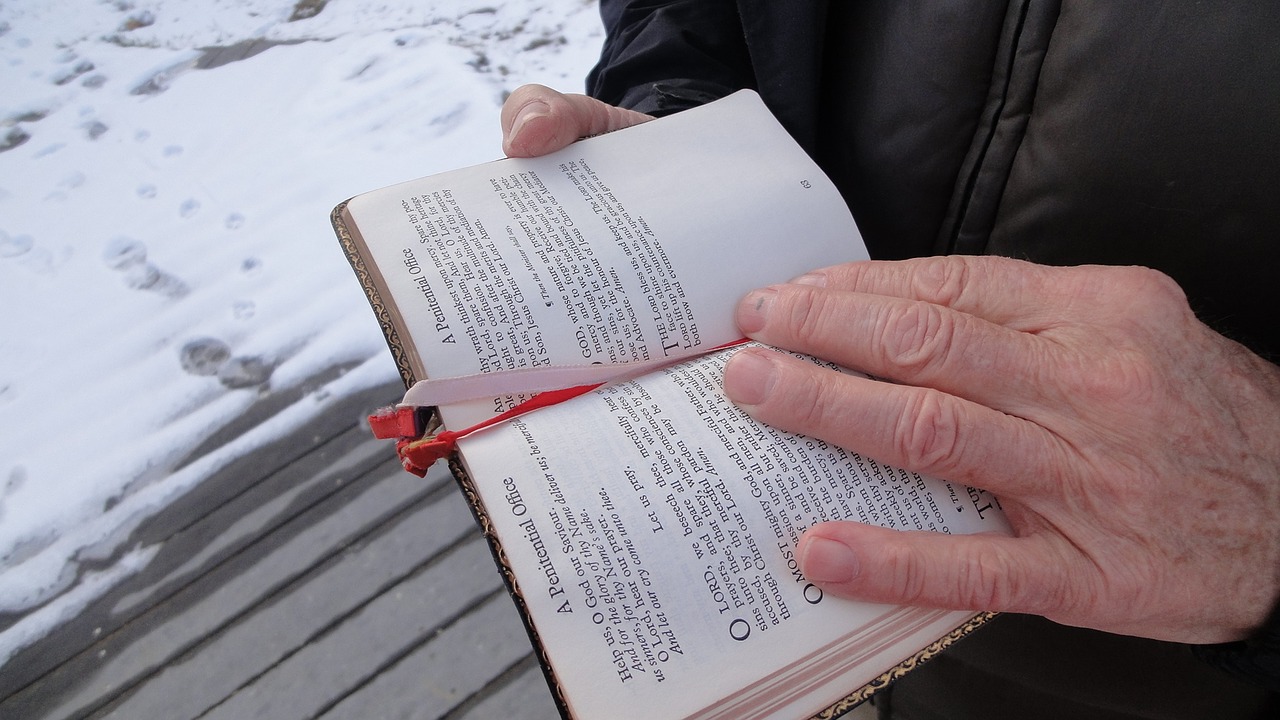 A prayer list is an important tool for the Christian spiritual life. Most of us need written lists because our memories are not good enough for us to rely exclusively upon them. My first prayer list consisted of slips of paper which I kept inside the cover of my Book of Common Prayer (BCP). Since I use the BCP offices, this was a convenient place to keep the information. Initially the pieces of paper were unorganized — just notes made as I became aware of needs or when people asked for prayer.
As my prayer life matured and I found myself having more requests to remember, I decided I needed better organization for my prayer list. I purchased the Personal Prayer Notebook from the Anglican Fellowship of Prayer. (It is still available from the Canadian AFP: click here for information.) This small three-ring binder (which I still have after about thirty-five years) has general information on prayer and tabbed sections for Adoration, Thanksgiving, Confession, Intercession, and Petition. Since it is a loose-leaf binder, one can insert pages with one’s own intercessions and petitions, or materials one finds useful in prayer such as meditations. This binder served me well for decades.
Some years ago I purchased an Android tablet. One of the primary uses of my tablet is reading. I soon realized that I could easily copy the BCP Daily Offices and Psalter to my tablet and use the tablet for daily prayer. Having copied the Offices and Psalter, I decided also to copy my prayer list to the tablet. For several years I have produced my prayer list pages (for the Personal Prayer Notebook) on my computer. Having my prayer list in a word processor document made updating quick and easy. I produced a pdf document from the word processor document and copied it to my tablet. The Aldiko Book Reader app makes it easy to use the office, psalter, and personal prayer list by switching among the documents as needed. And that is what I currently use for daily prayer. I have everything on one small tablet which is easy to transport and the files are simple to access and use. I also have the Bible (pdfs of both the ESV and the NET) for the daily scripture readings. No more juggling books, and since Aldiko automatically keeps my place for me, I don’t have to worry with bookmarks or ribbons. It is especially handy when travelling as I everything is on my tablet which I would take on a trip anyway. It’s lightweight, and easy to pack and carry.
 Theologuy